What Every Operator Should Know About Lift Planning
As a crane operator, your job is key to keeping everyone safe and work running smoothly. The lift plan is a detailed guide for each lift. It’s not just a rule; it’s essential for avoiding big problems.
Lift planning is the base of safe crane work. It involves thinking about every lift detail, like the load’s size and the environment. This way, operators can lower risks, work better, and follow OSHA regulations and standards.
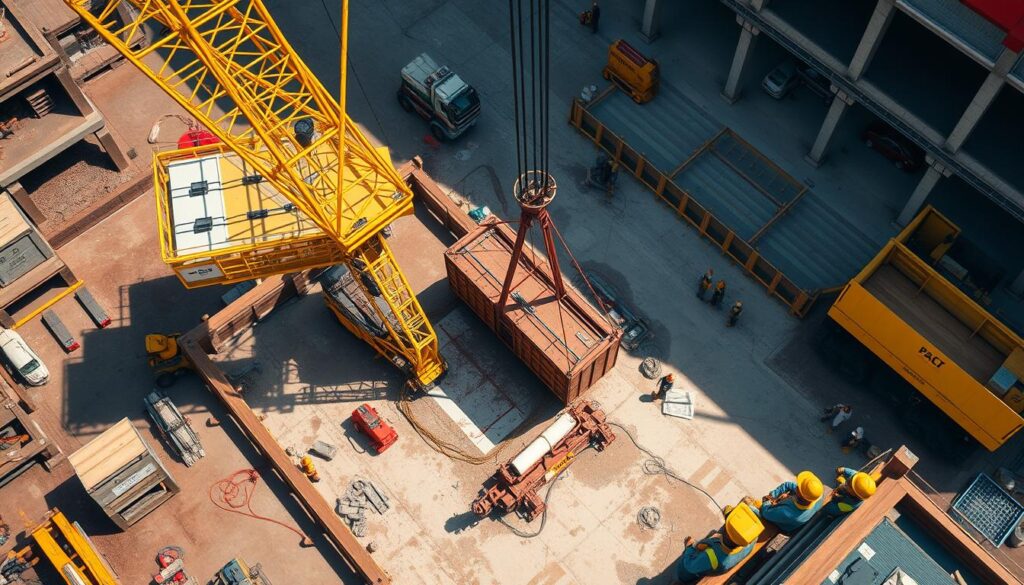
It doesn’t matter if you’re new or experienced. Knowing how important lift planning. https://certifiedsafetyexperts.com/ discuss what a lift plan includes, safety tips, and how to make a detailed plan. This will help make your crane work safe and efficient.
Understanding the Fundamentals of Lift Planning
Lift planning is key to safe and efficient crane use. It involves several important parts. These parts help reduce risks and follow safety rules.
Key Components of a Lift Plan
A good lift plan has several main parts:
- Load details: weight, size, center of gravity, and other load info
- Equipment specs: crane type, capacity, and setup
- Site conditions: ground stability, overhead space, and weather
- Rigging needs: sling types, where to attach, and how to spread the load
- Lift path and sequence: where to go, obstacles, and avoiding interference
Risk Assessment Basics
Spotting and fixing risks is vital in lift planning. The risk analysis process includes:
- Hazard spotting: finding possible dangers to the lift
- Risk checking: figuring out how likely and serious each hazard is
- Control steps: steps to lessen or remove the risks
Documentation Requirements
Good documentation is crucial for crane work. It keeps things clear and accountable. Important documents include:
- Lift plan: a detailed plan for the lift
- Crane check records: making sure the crane is safe and works right
- Operator certifications: checking the crane operator’s skills
- Safety rules: written plans for emergencies and reporting incidents
Knowing these lift planning basics helps improve safety, efficiency, and follow rules in crane work.
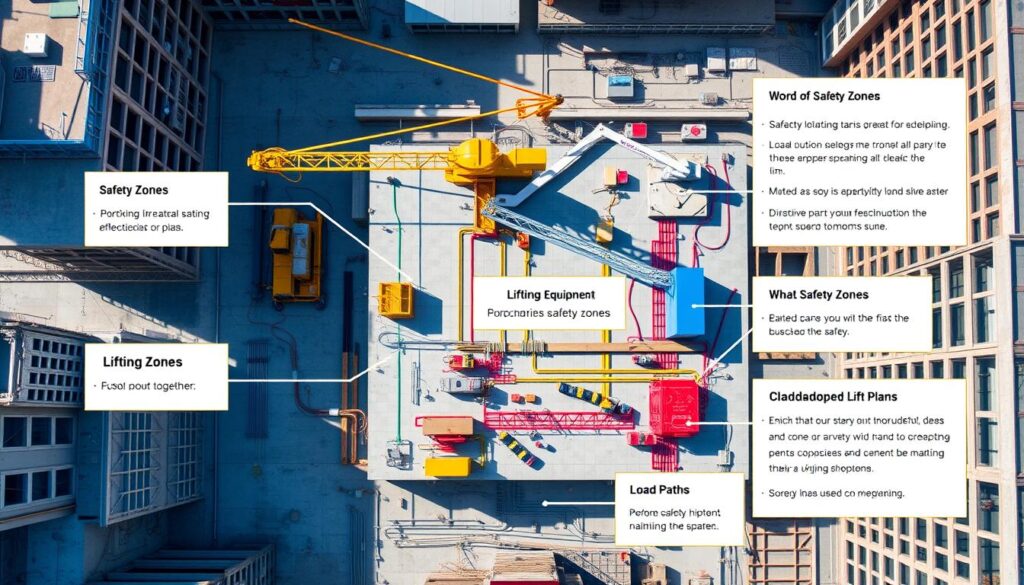
Essential Safety Considerations for Crane Operations
Operating cranes needs a deep understanding of safety rules and best practices. It’s key to keep crane operators, workers, and the public safe in any project. By focusing on safety, you can lower risks and make a safe work place.
Operator training is a must for crane safety. Crane operators need thorough training to safely use the equipment. They must know about load capacity, how to use controls, and emergency steps.
Using personal protective equipment (PPE) is also vital. Everyone on the job site should wear the right PPE, like hard hats, safety glasses, gloves, and bright clothes. This protects them from dangers.
Keeping the load stable is another key safety point. Crane operators must carefully figure out the load’s weight and how it’s spread. This ensures the load is safe and the crane won’t tip over or drop the load.
Regular equipment checks and upkeep are also key for crane safety. Things like the boom, hook, and cables need regular checks to spot and fix problems early. Keeping the equipment in good shape helps avoid failures and keeps the crane safe to use.
By focusing on these crane safety measures, you can make a safe work place for everyone. A safety-first culture, with good training, PPE, and equipment care, is the key to a successful crane operation.
Site Survey and Environmental Factors
Doing a detailed site evaluation is key for any crane operation’s success and safety. It involves checking the ground, looking for overhead dangers, and studying the weather. This ensures a safe and efficient lift.
Ground Condition Assessment
Checking the soil stability is a vital step in planning a lift. Operators need to look at the soil’s type, how compacted it is, and how much weight it can hold. This helps pick the right crane and how to set it up, and if any ground work is needed.
Overhead Hazard Identification
It’s also important to spot and avoid power line safety risks. Operators must map out where overhead utilities like power lines and cables are. This helps plan the crane’s path and keeps it safe from these dangers.
Weather Impact Analysis
Weather can greatly affect crane work. Operators must watch the wind speed limits and other weather like rain, temperature, and how clear it is. They need to be ready to adjust to changes in the weather for a successful lift.
By focusing on these site-specific factors, crane operators can lower risks, make sure the lift is stable and safe, and have successful crane operations.
Load Calculation and Equipment Selection
Getting the load weight right is key to lift planning. It helps avoid accidents by making sure the crane can handle the load. Knowing the load’s center of gravity is also vital for picking the right rigging and lift setup.
Choosing the right crane means looking at its load chart. This chart shows the crane’s max lift capacity based on boom length and angle. The right rigging, like slings and shackles, makes the lift safer and more stable.
- Accurately estimate the load weight to ensure the crane’s capacity is not exceeded.
- Determine the center of gravity to select the appropriate rigging equipment.
- Refer to the crane’s load chart to choose the right equipment for the job.
- Use the proper rigging selection, including slings, shackles, and other attachments, to enhance the safety and stability of the lift.
Crane operators can ensure safe and efficient lifts by mastering load weight estimation, center of gravity, and equipment selection. This knowledge is crucial for the success of any lift.
Communication Protocols and Hand Signals
Good communication is key in crane work. It makes sure everyone works together smoothly and safely. Knowing the right hand signals and how to use radios is crucial. This way, crane operators can share important info clearly with their team.
Standard Signal Guidelines
The crane world uses special hand signals for clear talk. These signals, like “Raise the Boom” and “Emergency Stop,” help avoid mix-ups. Following these rules keeps everyone safe and on the same page.
Radio Communication Best Practices
Radios are also vital in crane work. Good radio use helps teams work better together. It’s important to use the right words, speak clearly, and check if messages were understood. Staying calm and professional is key, especially in emergencies.
Emergency Response Procedures
Being ready for emergencies is very important. Crane teams need to know how to act fast and safely. Training and practice help everyone feel ready for any situation.
Legal Requirements and Industry Standards
In the world of lift planning and crane operations, following legal rules and industry standards is key. Operators must keep up with OSHA regulations. These rules ensure workplace safety by requiring proper training and strict safety protocols.
The American Society of Mechanical Engineers (ASME) also plays a big role. They set standards for crane design, construction, and use. These standards help keep cranes safe and working well. Following ASME standards shows an operator’s dedication to safety and quality.
Earning a crane operation certification is essential for ensuring safety and professionalism on the job. Proper certification equips operators with the training needed to handle cranes safely, minimizing risks to both workers and the public especially in environments where cranes operate close to people.
Staying compliant and going beyond what’s required can boost an operator’s reputation. It also helps make the industry safer for everyone.
Certified Safety Experts
7410 Chapel Hill Rd Suite 101 Cary, NC United States
+1 (919) 326-3742