
End of Tenancy Carpet Cleaning: What Tenants and Landlords Need to Know
Moving out of a rental property comes with a long to-do list. Carpet cleaning is often the task that catches tenants off guard — and the one most likely to trigger a bond deduction. Getting it wrong means money out of your pocket. Getting it right means walking away with your full bond refunded.
This guide covers everything you need to know about end of tenancy carpet cleaning: what it involves, when it’s legally required, what it costs, and how to book it the right way.
Key Takeaways
- End of tenancy carpet cleaning is a professional service — not a DIY vacuum. It uses hot water extraction or steam to deep-clean carpet fibers.
- Many leases require professional cleaning on exit, but laws vary by state and territory. Always check your lease and local regulations.
- Fair wear and tear cannot be charged to tenants — only damage or soiling beyond normal use qualifies for a bond deduction.
- Costs typically range from $30 to $60 per room, with minimum call-out fees applying in most cases.
- A certificate or receipt from the cleaning company is your best protection if a landlord disputes the condition of the carpets.
- Booking a professional cleaner before the final inspection gives you the strongest position if a dispute arises.
What Is End of Tenancy Carpet Cleaning?

Quick Answer: End of tenancy carpet cleaning is a professional deep-clean performed when a tenant vacates a rental property. It removes embedded dirt, stains, and odors using hot water extraction or steam cleaning — far beyond what a household vacuum can achieve.
Standard vacuuming removes surface-level dust and loose debris. It does not remove the ground-in dirt, pet hair, allergens, or stains that build up in carpet fibers over a tenancy. End of tenancy carpet cleaning tackles all of that.
Professional carpet cleaners use truck-mounted or portable hot water extraction machines. These inject hot water and cleaning solution deep into the carpet pile, then extract it along with the loosened dirt. The result is a carpet that looks, smells, and tests clean — not just surface-tidy.
This type of cleaning is specifically designed for property handover. The goal is to restore the carpet to its condition at the start of the tenancy, accounting for reasonable wear over time.
How End of Tenancy Carpet Cleaning Differs from Regular Cleaning
Most tenants vacuum regularly. Some spot-clean stains with store-bought products. Neither of these replaces a professional end of tenancy clean. Here is why they are not equivalent:
- Vacuuming removes surface debris only. It cannot lift embedded grime or refresh flattened pile.
- Spot cleaning treats individual stains but leaves surrounding areas untreated. It can also leave product residue that attracts more dirt.
- Rental carpet cleaners (hired machines from hardware stores) are weaker than professional equipment and harder to use correctly. Poor technique can over-wet carpets, leading to mold or shrinkage.
- Professional end of tenancy cleaning covers the full carpet area, uses commercial-grade equipment, and is performed by trained technicians who know how to handle different carpet types.
When Does Your Lease Require Professional Carpet Cleaning?
Quick Answer: Many lease agreements include a clause requiring professional carpet cleaning on exit. However, in several Australian states, mandatory cleaning clauses are unenforceable if the carpets were clean at the start of the tenancy and no damage occurred beyond normal wear.
This is one of the most misunderstood areas of rental law. A lease can say “carpets must be professionally cleaned on exit” — but that does not automatically make it enforceable.
In most Australian states and territories, rental laws protect tenants from being charged for cleaning that is not reasonably necessary. If the carpets were professionally cleaned before you moved in and you maintained them to a reasonable standard, you may not be required to pay for professional cleaning on exit.
The key question is always: are the carpets in the same condition they were at the start of the tenancy, minus fair wear and tear?
What Counts as Fair Wear and Tear on Carpets?
Fair wear and tear refers to the gradual, unavoidable deterioration that happens through normal daily use. A landlord cannot charge a tenant for this.
Examples of fair wear and tear on carpets include:
- Slight fading or dulling of carpet color from sunlight or foot traffic
- Carpet pile flattening in high-traffic areas like hallways
- Minor fraying at edges from normal foot traffic
- General aging of older carpet installed before the tenancy began
Examples of damage beyond fair wear and tear (which tenants can be charged for) include:
- Stains from food, drink, pet accidents, or chemicals
- Burns or scorch marks
- Torn or ripped carpet sections
- Strong odors from pets or smoking
- Heavy soiling across large areas
State-by-State Carpet Cleaning Rules at a Glance
| State / Territory | Mandatory Cleaning Clause Enforceable? | Key Condition | Tribunal for Disputes |
|---|---|---|---|
| New South Wales | No — not automatically | Only if carpets were professionally cleaned at start of tenancy | NSW Civil and Administrative Tribunal (NCAT) |
| Victoria | No — clause is void if not reasonably necessary | Tenant must return carpets to condition at start, minus wear and tear | Victorian Civil and Administrative Tribunal (VCAT) |
| Queensland | Conditional | Clause is enforceable only if property was professionally cleaned before move-in | Queensland Civil and Administrative Tribunal (QCAT) |
| Western Australia | Yes — if specified in lease | Lease must clearly state the requirement | Magistrates Court or Commissioner for Consumer Protection |
| South Australia | Conditional | Based on condition at start of tenancy and ingoing report | South Australian Civil and Administrative Tribunal (SACAT) |
| Australian Capital Territory | No — mandatory clauses are prohibited | Tenants must return carpets to a reasonable condition | ACT Civil and Administrative Tribunal (ACAT) |
Note: Rental laws change. Always check your lease, your state’s tenancy authority website, or seek advice from a tenants union for the most current rules.
What Does End of Tenancy Carpet Cleaning Include?
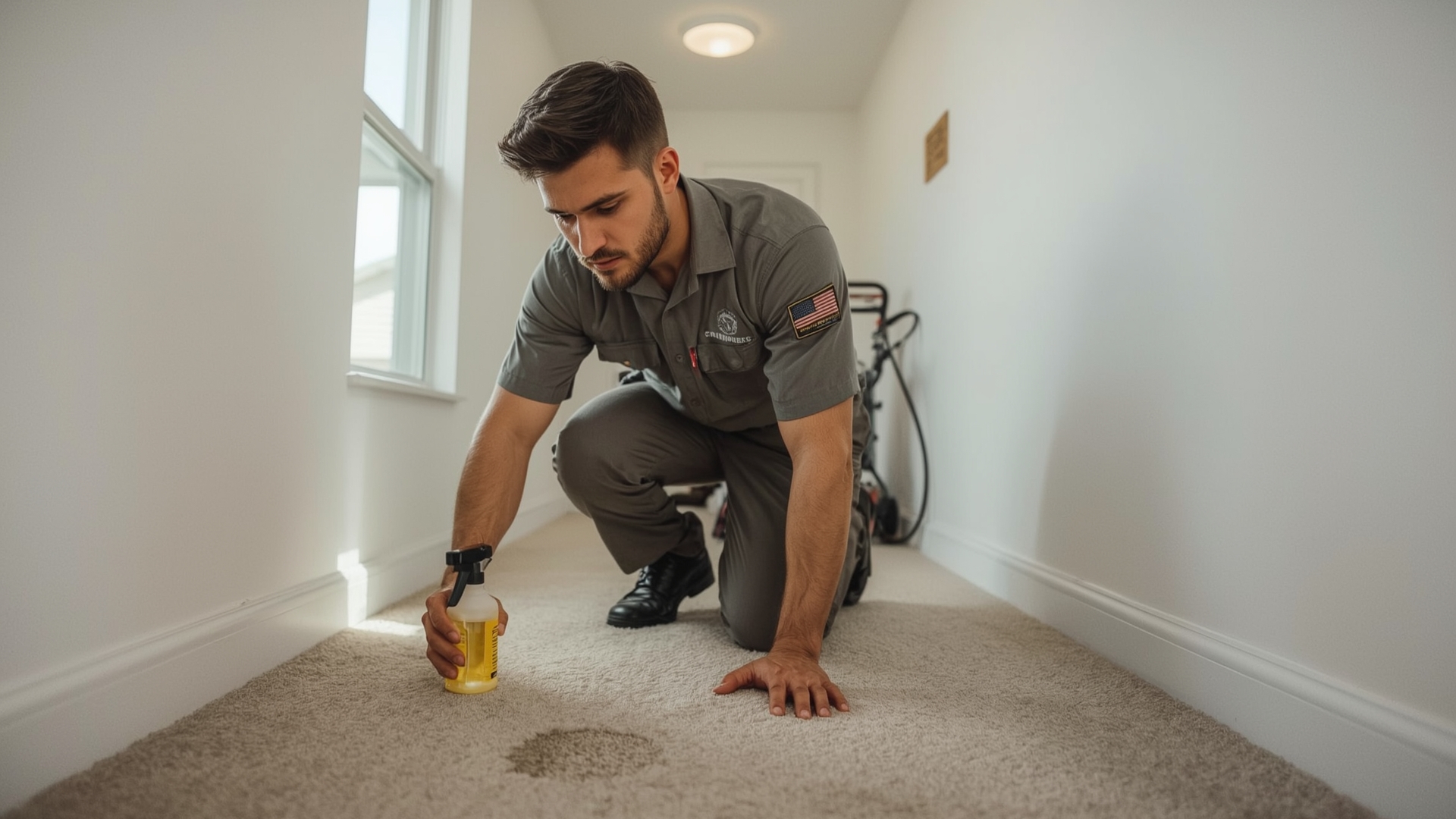
Quick Answer: A professional end of tenancy carpet clean includes pre-vacuuming, pre-treatment of stains, hot water extraction cleaning of all carpeted areas, deodorizing, and a final inspection. Most services provide a receipt or completion certificate as proof.
Understanding what the service covers helps you compare quotes and avoid disputes later. Not all carpet cleaning services are the same, and “cheap” often means a shorter process with weaker results.
The Standard Process Step by Step
- Pre-inspection: The technician assesses carpet type, condition, and any visible stains before starting work.
- Pre-vacuuming: Loose debris is removed first so the wet cleaning process is not diluted by dry dirt.
- Pre-treatment: Stain-specific solutions are applied to problem areas and left to break down the soil.
- Hot water extraction: The main cleaning stage. A machine injects hot water and solution, then extracts it along with loosened dirt.
- Spot treatment (second pass): Stubborn stains may need additional treatment after the main clean.
- Deodorizing: A neutralizing agent is applied to remove odors, particularly important after pets or smoking.
- Grooming: Carpet pile is brushed to restore an even appearance and speed up drying.
- Documentation: A receipt, invoice, or completion certificate is issued to the tenant.
What End of Tenancy Carpet Cleaning Does Not Cover
Some things fall outside the scope of a standard carpet clean. Knowing this upfront prevents surprises:
- Carpet repairs such as re-stretching, patching, or seam repairs
- Replacement of damaged carpet sections
- Cleaning of hard floors (tiles, timber, vinyl) — these are usually a separate service
- Furniture moving (most services clean around furniture unless specified otherwise)
- Stain removal guarantees — some stains are permanent and cannot be removed by cleaning alone
How Much Does End of Tenancy Carpet Cleaning Cost?
Quick Answer: End of tenancy carpet cleaning typically costs between $30 and $60 per room in Australia, with minimum call-out fees of $80 to $150. A three-bedroom home usually costs between $150 and $350 depending on carpet size, condition, and location.
Carpet Cleaning Cost by Property Size
| Property Size | Approximate Carpet Area | Estimated Cost (AUD) | Notes |
|---|---|---|---|
| Studio / 1 bedroom | 20–40 sqm | $80–$150 | Minimum call-out fee often applies |
| 2 bedroom apartment | 40–60 sqm | $120–$200 | Price varies by city and access |
| 3 bedroom house | 60–90 sqm | $150–$300 | Stair cleaning charged separately |
| 4 bedroom house | 80–120 sqm | $200–$380 | Pet treatment adds $30–$80 per room |
| Stairs (per flight) | Varies | $40–$80 | Usually charged per flight of 12–14 steps |
What Affects the Final Price?
Several factors push carpet cleaning costs up or down:
- Carpet condition: Heavy soiling or pet damage requires more time and chemical treatment, increasing the cost.
- Carpet type: Wool, berber, and shag carpets require specialist techniques and may cost more than standard nylon or polyester carpet.
- Location: Capital city prices are generally higher than regional areas. Sydney and Melbourne tend to be the most expensive markets.
- Access: Upper-floor apartments without lift access or properties with long carry distances for equipment may attract a surcharge.
- Add-on services: Scotchgard protection, flea treatment, or sanitizing treatments cost extra and are charged per room or per square metre.
How Do You Book End of Tenancy Carpet Cleaning?
Quick Answer: Book a professional carpet cleaner at least one week before your lease end date. Request a written quote, confirm what is included, and ask for a receipt or certificate. Schedule cleaning after all furniture is removed but before the final inspection.
Timing the Booking Correctly
Timing is everything with end of tenancy carpet cleaning. Book too early and the carpets may get dirty again before the inspection. Book too late and you may not get an available appointment.
The ideal window is one to three days before your final property inspection. This gives the carpets time to dry fully (typically four to eight hours after hot water extraction) before the agent or landlord walks through.
What to Confirm Before You Book
Before confirming a booking, ask the following:
- Is the quote based on room size or per square metre?
- Does the price include pre-treatment of stains?
- What is the policy if the landlord is not satisfied with the result?
- Will a receipt or certificate be provided?
- Is there a bond-back guarantee, and what are its conditions?
- Are there any extra charges for pets, stairs, or heavily soiled areas?
Should You Use a Cleaner Recommended by Your Property Manager?
Property managers often recommend specific cleaning companies. You are generally not required to use their preferred cleaner — you have the right to choose your own provider, as long as the work meets the required standard.
That said, using a company familiar with local landlord expectations can reduce the chance of a dispute. If you use your own cleaner, keep the receipt and certificate. These are your proof if any issue arises.
What Is a Bond-Back Guarantee and Does It Protect You?
Quick Answer: A bond-back guarantee means the carpet cleaning company will return to re-clean if the landlord or agent raises a concern within a set period, usually 24 to 72 hours after the initial clean. It does not guarantee your full bond refund, only a re-clean of disputed areas.
Bond-back guarantees are a marketing term used by many carpet cleaning companies. They offer reassurance, but you need to understand what they actually cover.
Most guarantees have conditions. The re-clean must be requested within a short window (often 24 to 72 hours). The complaint must relate specifically to the carpet cleaning — not other aspects of the final inspection. And the stain or area must be cleanable; permanent damage is excluded.
Always read the guarantee terms before booking. A genuine guarantee with clear conditions is a good sign of a reputable company.
How Do You Document Carpet Condition to Avoid Bond Disputes?
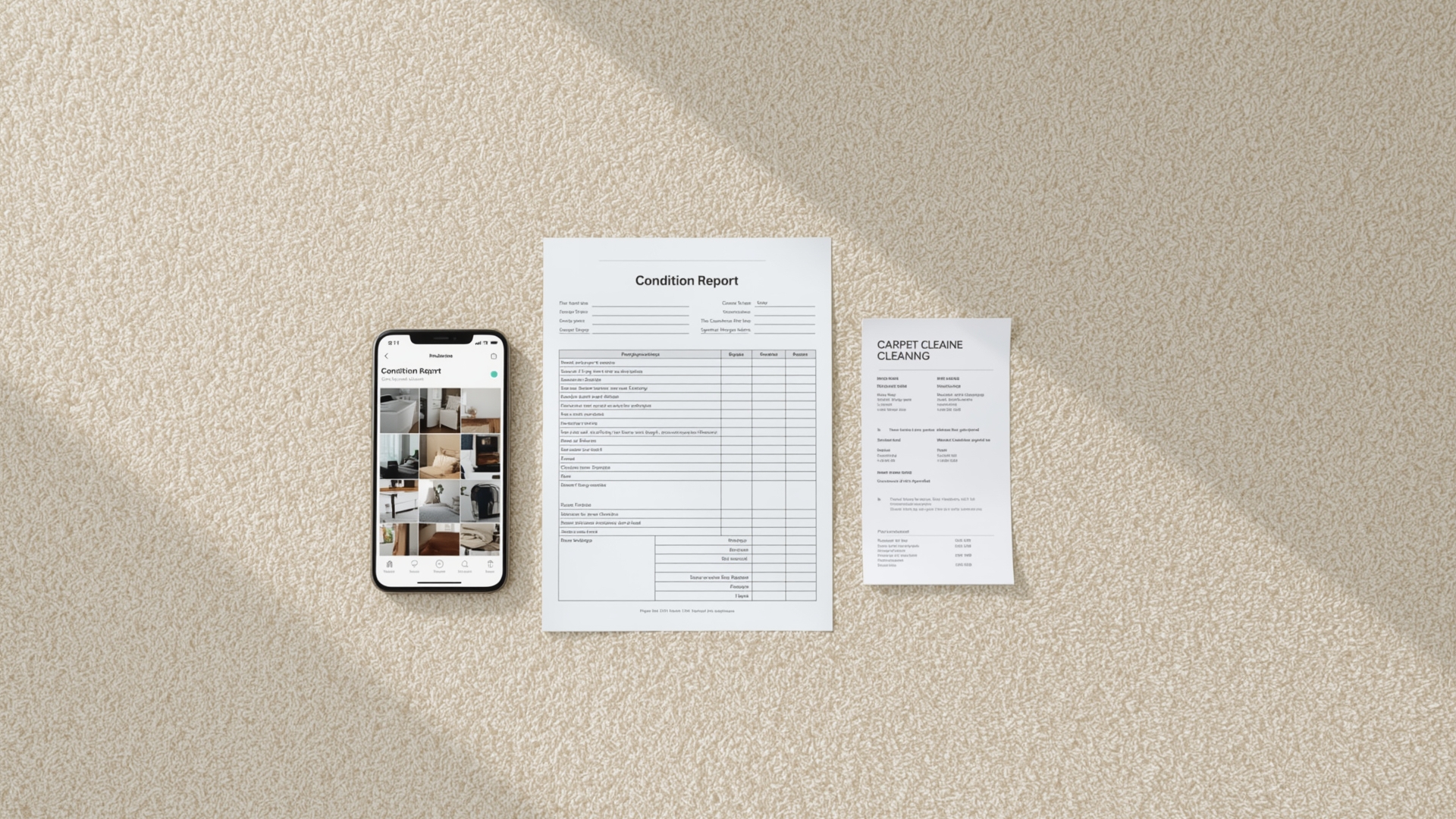
Quick Answer: Take timestamped photos or video of all carpeted areas immediately after the professional clean, before the final inspection. Compare these against your ingoing condition report. Keep the cleaning receipt as written proof of the service performed.
The Role of the Condition Report
Your ingoing condition report (completed at the start of the tenancy) is the baseline for every end-of-tenancy comparison. It documents the carpet’s condition when you moved in.
If the ingoing report noted stains, fraying, or worn patches, those cannot be charged to you on exit. If it showed clean, undamaged carpets, you are expected to return them in a comparable state minus reasonable wear.
Always request a copy of the ingoing condition report when you move in. If it was not provided, request it from your property manager. This document is essential protection if a dispute reaches a tribunal.
What to Keep as Evidence After Cleaning
- Dated invoice or receipt from the carpet cleaning company
- Any completion certificate or service report provided by the cleaner
- Timestamped photos of all carpeted rooms post-clean
- A copy of your ingoing condition report for comparison
- Any email or written communication with the cleaning company confirming the scope of work
Can a Landlord Charge for Carpet Cleaning If You Already Cleaned the Carpets?
Quick Answer: A landlord can only charge for additional carpet cleaning if the carpets are not at the standard documented in the ingoing condition report, minus fair wear and tear. If you have professional cleaning receipts and photos, you have strong grounds to dispute any additional charges.
This is a common source of bond disputes. A tenant gets the carpets professionally cleaned, but the landlord still requests a deduction. Here is how to handle it.
First, request written reasons for the deduction. Vague claims like “carpets were dirty” are not enough. The landlord must show evidence of how the carpets fell short of the ingoing standard.
Second, compare the ingoing condition report against the post-clean photos and the cleaner’s receipt. If the evidence supports your position, you can dispute the deduction through your state’s tenancy authority or tribunal.
Third, do not simply accept a deduction you believe is unfair. The process for disputing bond deductions exists specifically for these situations, and many tenants win these disputes when they have proper documentation.
What Type of Carpet Cleaning Method Is Best for End of Tenancy?
Quick Answer: Hot water extraction (also called steam cleaning) is the most widely accepted method for end of tenancy carpet cleaning. It delivers the deepest clean and is recognized by most landlords and property managers as the industry standard for rental handovers.
Carpet Cleaning Methods Compared
| Method | How It Works | Drying Time | Effectiveness | Suitable for End of Tenancy? |
|---|---|---|---|---|
| Hot Water Extraction (Steam Cleaning) | Injects hot water and solution, then extracts | 4–8 hours | Very high — removes deep-set dirt and odors | Yes — industry standard |
| Dry Cleaning (Encapsulation) | Low-moisture compound breaks down and encapsulates dirt | 1–2 hours | Moderate — good for surface soil | Limited — not accepted by all landlords |
| Bonnet Cleaning | Rotary machine with absorbent pad buffs the surface | 1–3 hours | Low — surface only | No — not suitable for tenancy handover |
| Shampooing | Foamy solution worked in, then extracted or dried | 6–12 hours | Moderate — can leave residue | Limited — residue attracts re-soiling |
| DIY Rental Machine | Consumer-grade hot water extraction | 8–24 hours | Low to moderate — depends on technique | Risky — not accepted by many landlords |
What Happens If You Skip Professional Carpet Cleaning at Move-Out?
Quick Answer: If you skip professional carpet cleaning and the landlord determines the carpets are not at the required standard, they can apply for a bond deduction. The cost of professional cleaning is then deducted from your bond, often at a higher rate than if you had booked it yourself.
Skipping the clean is rarely worth the risk. A landlord-arranged clean after the fact typically costs more than one you book yourself. You also lose control over the timing, the company chosen, and the price paid.
More importantly, you lose the documentation. Without a receipt showing you took steps to clean the carpets, you have no defense if the landlord raises a concern.
Even if cleaning is not strictly required under your lease or local law, it is usually worth doing. A professionally cleaned carpet removes any ambiguity from the final inspection and reduces the chance of a dispute altogether.
Common Reasons Landlords Request Carpet Cleaning at Move-Out
- Visible staining from food, drinks, or pet accidents
- Odors from pets, cooking, or cigarette smoke
- General heavy soiling in high-traffic areas
- Lease clause requiring professional cleaning on exit
- Carpets not matching the condition shown in the ingoing condition report
Frequently Asked Questions About End of Tenancy Carpet Cleaning
Do I have to use a professional carpet cleaner when I move out?
It depends on your lease and your state’s rental laws. Some leases require it, and some states enforce that requirement — but only if the carpets were professionally cleaned before you moved in. Check your ingoing condition report and your lease clause carefully before assuming you must pay for professional cleaning.
How long does carpet cleaning take to dry before the final inspection?
Hot water extraction typically takes four to eight hours to dry fully. Drying time depends on humidity, ventilation, and carpet thickness. Schedule your clean at least one full day before the property inspection to be safe. Open windows and run fans to speed up drying.
Can I use a hired carpet cleaning machine instead of a professional service?
You can, but it carries risks. Consumer-grade rental machines are less powerful than professional equipment. They can also over-wet carpets, leading to mold or slow drying. Many landlords do not accept DIY machine cleaning as equivalent to a professional service, which could leave you exposed to a bond deduction.
What happens if a stain cannot be removed by cleaning?
Some stains are permanent and cannot be lifted even by professional equipment. A reputable cleaner will tell you this during the pre-inspection. In these cases, the landlord may claim a contribution toward carpet repair or replacement, but only for damage beyond fair wear and tear — not for stains that were already present at the start of the tenancy.
Does end of tenancy carpet cleaning include deodorizing for pet odors?
Most professional services offer deodorizing as part of the clean or as an add-on. Pet odor treatment often requires a specialized enzyme-based solution applied before the main clean. If you have pets, confirm that the deodorizing step is included in your quote before booking.
What is a carpet cleaning certificate and why do I need one?
A carpet cleaning certificate is a document issued by the cleaning company confirming that the carpets were professionally cleaned on a specific date. It typically includes the address, date, technician name, and services performed. This certificate is your written proof of cleaning and can be used to dispute any bond deduction claim related to carpet condition.